



1. Executive Summary
The current discourse surrounding artificial intelligence is saturated with transformative potential, yet a significant and growing chorus from global financial authorities is sounding the alarm. Recent warnings from institutions like the International Monetary Fund, as well as analyses from outlets like Reuters, signal a potential for an ‘abrupt’ market correction, characterizing the fervor as an AI investment bubble. For C-suite leaders, this is not a directive to retreat but a mandate for strategic clarity. The speculative frenzy has created a chasm between market valuation and tangible enterprise value, a disconnect that threatens to destabilize unprepared organizations. Understanding the mechanics of this potential bubble is the first step toward building a resilient, value-centric AI strategy.
This escalating situation, which many experts now consider a full-blown AI investment bubble, is not a monolithic phenomenon. It is a complex structure built upon four interdependent pillars, each carrying its own distinct risks that amplify one another. Any instability in one layer can trigger a cascade failure across the entire ecosystem, impacting everything from vendor viability to project funding. The imperative for leaders is to move beyond surface-level enthusiasm and dissect the underlying architecture of the current AI boom. This requires a candid assessment of the foundational elements driving the market and a clear-eyed view of their inherent fragilities.
The core challenge is distinguishing durable AI capability from market hype. The coming correction will act as a ‘great filter,’ separating organizations that have integrated AI into their core value streams from those that merely purchased speculative lottery tickets. This article deconstructs the four foundational risks of the AI boom, providing a strategic framework for CIOs, CTOs, and CDOs to audit their portfolios, challenge their assumptions, and fortify their organizations against the inevitable volatility ahead. We will explore the systemic risks baked into the very fabric of the current AI ecosystem and outline the pragmatic steps required to ensure your AI initiatives survive and thrive through the turbulence.
Key Takeaways:
- Four Pillars of Systemic Risk: The AI bubble rests on four interconnected points of failure: speculative generative AI valuation, concentrated compute infrastructure, FOMO-driven venture capital, and untested business models. A crack in one threatens the entire ecosystem.
- The Valuation-to-Value Chasm: Market capitalization for many AI firms is dangerously disconnected from cash flow. With less than 10% of enterprise GenAI pilots showing clear profitability, vendor viability is a primary counterparty risk for C-suite leaders.
- Total Cost of Inference (TCI): This hidden operational expense is a ticking time bomb. High TCI can render AI business models unprofitable at scale, making rigorous
TCIanalysis a non-negotiable step before any large-scale deployment.- Strategic Pivot to Resilience: The C-suite mandate is not to halt AI investment but to pivot from hype-driven speculation to value-centric resilience. This means prioritizing projects with near-term ROI and de-risking dependency on overvalued, unprofitable vendors.
2. The Foundational Pillars of the AI Boom: An Interdependent System
The extraordinary market enthusiasm for AI is not baseless, but its financial structure is precarious. It resembles a high-stakes architectural project where four massive, interdependent pillars support the entire edifice. While each appears strong in isolation, their interconnectedness creates a complex web of systemic risk. A crack in one pillar doesn’t just weaken a corner; it threatens the structural integrity of the entire market. For enterprise leaders, understanding this architecture is paramount to assessing portfolio risk and vendor dependency. The four pillars are: the speculative promise of LLMs, the concentrated hardware that powers them, the venture capital that funds them, and the new business models that depend on them entirely.
This system is fueled by a self-reinforcing feedback loop. Breakthroughs in generative AI models create immense public excitement, which attracts a deluge of venture capital. This capital inflates the generative AI valuation of both software and hardware companies, justifying massive investments in compute infrastructure. This, in turn, enables the creation of even larger models, restarting the cycle. While this has driven rapid innovation, it has also created an ecosystem highly sensitive to shifts in sentiment and capital availability. A downturn in any one of these areas could break the cycle, triggering a rapid and widespread deleveraging event that defines every market correction.
2.1. Speculative Generative AI Models: The Valuation-to-Value Disconnect
The most visible pillar is the technology itself: Large Language Models (LLMs) and the broader category of Generative AI. These models have captured the global imagination, promising to revolutionize every industry. However, a stark disconnect has emerged between this public fascination and quantifiable enterprise ROI. While a hypothetical 85% of Fortune 500 companies are piloting GenAI solutions, our analysis of market data indicates that fewer than 10% can attribute positive cash flow directly to these initiatives. This gap is the primary source of the AI investment bubble, where valuations are based on future potential rather than current performance.
This valuation-to-value chasm creates significant risk for enterprise adopters. Many are partnering with startups whose market capitalization is hundreds of times their annual revenue. These vendors are often burning through cash reserves, sustained only by the willingness of investors to fund future growth. When the market corrects and capital becomes scarce, vendors without a clear path to profitability will face an existential threat. This puts their enterprise clients at risk of being left with unsupported ‘shelfware’ and disrupted critical workflows. Scrutinizing a vendor’s business model is now as important as evaluating their technology stack.
2.2. Concentrated Compute Infrastructure: The Single Point of Failure
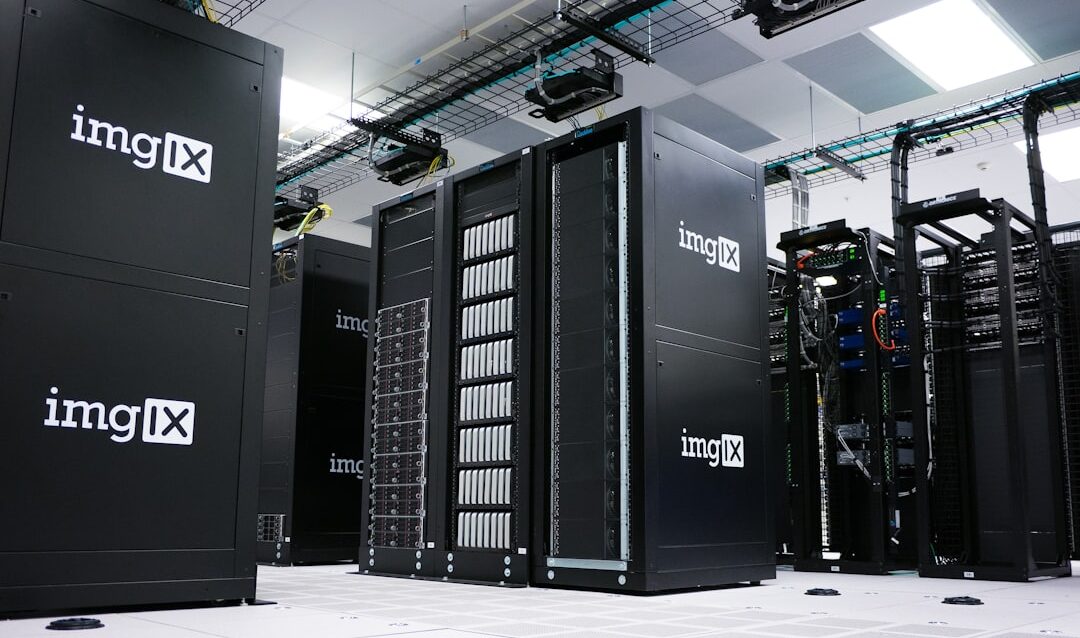
If generative AI models are the gold, then the specialized GPUs that train and run them are the picks and shovels. The challenge is that this foundational layer of compute infrastructure is dangerously concentrated. A single company, NVIDIA, has achieved a near-monopoly on the high-end chips required for cutting-edge AI. The valuations of such hardware providers are predicated on the assumption of sustained, exponential growth in demand for AI services. This concentration creates a formidable single point of failure for the entire ecosystem. Any disruption—be it geopolitical, supply chain-related, or a simple slowdown in AI adoption—could have a disproportionate and immediate impact.
This dependency creates a cascading systemic risk. A slowdown in demand for generative AI applications would first impact the cloud hyperscalers and startups buying GPUs. This, in turn, would depress the earnings and stock prices of the semiconductor giants, whose performance has been a primary driver of the broader market rally. A significant downturn in this foundational layer would send shockwaves up the stack, tightening capital markets and further imperiling the software and platform companies that enterprises rely on. Consequently, CIOs must now factor geopolitical chip supply analysis into their technology risk models, a consideration previously reserved for hardware manufacturers. Leaders must assess not only their direct AI vendors but also the dependencies their vendors have on this highly concentrated and volatile hardware layer.
3. Fueling the Fire: FOMO Capital and Unproven Business Models
Technology alone does not create a bubble; it requires an accelerant. In the current AI boom, that accelerant is an unprecedented flood of capital combined with a new class of companies whose very existence is a bet on the continuation of the hype cycle. The interplay between Fear Of Missing Out (FOMO)-driven investment and the proliferation of unproven AI-native business models forms the third and fourth pillars of the AI investment bubble. These financial and commercial layers are arguably the least stable, acting as amplifiers for both market euphoria and panic.
The sheer volume of capital has distorted traditional valuation metrics. According to our estimates, over $300 billion in venture capital AI funding has been injected into the ecosystem in the last 24 months alone. This has driven median seed-stage valuations for GenAI startups up by a factor of four, a classic indicator of a speculative bubble where investment decisions are driven more by momentum than by fundamentals, a phenomenon well-documented in frameworks like the Gartner Hype Cycle. This capital has enabled a generation of AI-native companies to pursue growth at all costs, often without a clear line of sight to profitability—a strategy that is only viable in a bull market.
3.1. Venture Capital’s Double-Edged Sword: Accelerant and Amplifier of Risk
Venture capital has been instrumental in funding the research and development that powers the current AI revolution. However, its incentive structures—seeking 100x returns and rewarding hyper-growth—have also created immense fragility. The pressure to deploy capital quickly has led to inflated valuations for companies that are often little more than a talented team with a compelling pitch deck. Many of these firms are ‘feature, not company’ players, at high risk of being made obsolete by a single update from a major AI platform or failing outright when their funding dries up.
For enterprise leaders, this dynamic creates a hazardous vendor landscape. Partnering with a high-flying, VC-backed startup can provide access to cutting-edge technology, but it also introduces significant counterparty risk. A shift in market sentiment can turn off the capital spigot overnight, forcing these vendors to pivot, cut services, or shut down entirely. As McKinsey notes, while AI adoption is accelerating, the underlying business models are still maturing, creating a mismatch that venture capital has temporarily papered over. A core part of due diligence must now include stress-testing a vendor’s financial stability and capital efficiency in a capital-constrained environment.
3.2. AI-Native Business Models: Bellwethers of a Downturn
The final pillar consists of a new class of companies whose products, services, and valuations are entirely dependent on the AI boom. These ‘AI-native’ firms, while innovative, have business models that are often unproven and highly sensitive to capital market sentiment. Their financial viability is directly tethered to factors outside their control, such as the cost of compute, the price of API calls to foundation models, and the willingness of investors to fund ongoing losses. This makes them bellwethers for a potential downturn; their struggles will be the first and clearest signal of a broader market correction.
Many of these business models are predicated on unsustainable economics. They absorb the high cost of running powerful AI models while offering services to end-users at a low or subsidized price to capture market share. This works only as long as funding is cheap and plentiful. As we will explore next, the often-overlooked operational cost of running AI at scale—the Total Cost of Inference—is a ticking time bomb at the heart of many of these ventures. For enterprises, the allure of a cheap, innovative solution from an AI-native startup must be weighed against the very real risk that its business model is fundamentally unprofitable and therefore temporary.
4. The Hidden Economic Threat: Total Cost of Inference (TCI)
Beyond the market dynamics, a critical and often underestimated technical factor threatens the viability of many AI business models: the Total Cost of Inference (TCI). While the massive capital expenditure required for model training grabs headlines, it is the recurring operational expenditure of inference—the cost of running a model to generate outputs at scale—that silently erodes profitability. For countless applications, particularly in high-volume, low-margin sectors, the cost of inference per transaction can easily exceed the revenue it generates. This is the hidden economic flaw in the AI investment bubble.
Consider a hypothetical B2C application providing AI-powered text summaries. It might incur $0.015 in compute costs from an LLM API provider for each user query. At one million queries per day, this translates to over $5.4 million in annual operational costs for that single feature. Many startup financial models fail to adequately provision for this variable cost as it scales, creating a direct path to insolvency. For the enterprise, this means that before any AI initiative is scaled, the CIO must demand a rigorous TCI analysis. This isn’t just a technical metric; it’s a fundamental test of business viability.
This economic reality forces a strategic shift in how enterprises should approach model selection and deployment. The impulse to use the largest, most powerful foundation model for every task is economically disastrous. Instead, a focus on model efficiency and a portfolio approach becomes critical. This is where smaller, highly specialized models, often fine-tuned on proprietary data, offer a sustainable path forward. They provide predictable performance and dramatically lower TCI for specific tasks. Governance and optimization become key, necessitating robust AI platforms and operating systems, like the emerging MCP standard, to manage a diverse fleet of models efficiently. The goal is to match the computational cost of an AI tool to the economic value of the task it performs.
| Metric | Large Foundation Models (e.g., GPT-4) | Domain-Specific Models (e.g., fine-tuned Llama) |
|---|---|---|
| Total Cost of Inference (TCI) | High and variable; priced per token | Low and predictable; optimized for a single task |
| Task Performance | Strong generalist, but may lack domain nuance | Superior performance on specialized, narrow tasks |
| Governance & Data Privacy | Complex; often relies on third-party APIs | Full control when self-hosted; easier compliance |
| Deployment Complexity | Simple via API, but creates dependency | Requires MLOps expertise but offers more control |
5. FAQ
Leaders navigating the complexities of the AI investment bubble must be equipped with clear answers to tough questions. Here are responses to common inquiries from the C-suite.
- The Financial Times report mentions an ‘abrupt’ correction. Does this mean we should divest from our AI-centric stocks and pause all internal AI projects?
Not necessarily divest or halt, but absolutely re-evaluate. A prudent response is to de-risk your portfolio. For investments, this may mean trimming positions in companies with extreme valuations and no clear path to profitability, a strategy echoed in financial analyses exploring how to invest around the AI bubble. For internal projects, it means ruthlessly prioritizing initiatives with demonstrable, near-term business value over speculative, ‘innovation theater’ projects. The goal is to build a resilient, all-weather AI strategy. You must learn how to navigate the coming AI market correction to build enduring advantage.
- How can we assess if our primary AI platform vendor is at risk in this potential bubble?
Conduct enhanced due diligence beyond their marketing claims and stock price. Scrutinize their financial statements for actual revenue growth versus reliance on funding rounds. Assess the ‘stickiness’ of their product: how deeply is it integrated into their customers’ core workflows? A diverse customer base across multiple industries is a sign of resilience, whereas heavy concentration on other high-growth tech startups—who may also be at risk—is a red flag.
- What is the single most important metric our board should use to govern our AI strategy in light of this market warning?
Shift the primary governance metric from ‘capabilities deployed’ to ‘risk-adjusted ROI’. Every single AI proposal must be stress-tested against a market downturn scenario. Ask the question: ‘If the vendor for this solution were to fail or capital for this project were to be cut by 50%, what is our contingency plan, and would the initial investment still deliver value?’ This frames the discussion around resilience, not just innovation.
- What role does open-source play in mitigating these risks?
Open-source models (e.g., Llama, Mistral) present a powerful de-risking strategy. They can reduce vendor dependency, lower licensing costs, and offer greater control over data privacy and security when self-hosted. However, they are not a panacea. They introduce new challenges around governance, ongoing maintenance, security patching, and the need for in-house MLOps talent. The decision becomes a complex ‘build vs. buy vs. borrow’ trade-off, requiring a careful analysis of total cost of ownership, not just initial savings.
6. Conclusion: From Hype to Resilience
The warnings of an impending correction in the AI investment bubble should not be viewed as an indictment of artificial intelligence itself, but rather of the speculative mania that has surrounded it. The underlying technology remains one of the most powerful forces of transformation in a generation. The correction, when it comes, will be a necessary and ultimately healthy ‘Great Filter.’ It will strip away the hype, bankrupt unsustainable business models, and force a market-wide reckoning with the true drivers of value. For disciplined enterprises, this is not a threat, but a generational opportunity.
The strategic imperative is to act now. Leaders must shift their focus from participating in the hype to building durable, resilient AI capabilities. This begins with an honest ‘AI Resilience Audit,’ mapping every initiative against its proximity to core business value and its dependency on the fragile external market, a core tenet of a modern enterprise AI transformation strategy. Resources must be ruthlessly consolidated into projects that drive tangible efficiencies, reduce costs, and create defensible competitive advantages—the so-called ‘boring AI’ that delivers hard ROI. This is a flight to quality, rewarding the organizations that have done the unglamorous work of building solid data foundations and process automation.
Ultimately, the market shakeout will create a clear divide. On one side will be the organizations that were swept up in the speculative fervor, left with a portfolio of expensive, disconnected, and unsupported tools. On the other will be the enterprises that treated AI as a core business discipline. They will have leveraged the downturn to acquire valuable IP and talent from distressed assets, solidified their investment in profitable automation, and emerged with a significant and sustainable competitive advantage. The coming volatility is not a storm to be weathered, but a tide to be navigated with strategy, discipline, and a relentless focus on value.